


Can Artificial Intelligence Transform Climate Forecasting and Early Warning in Eastern Africa?
By Paula Machio in collaboration with the ICPAC Climate Change Technical Working Group

© Canva
In recent years, communities across Eastern Africa have experienced devastating floods, prolonged droughts and increasingly unpredictable rainfall patterns that have strained disaster response systems and threatened lives and livelihoods. Every additional hour of warning can make the difference between protecting communities and responding to a catastrophe. As climate risks continue to intensify, the demand for timely, accurate and actionable weather and climate information has never been greater.
For decades, weather and climate forecasting have relied on numerical weather prediction models and the expertise of meteorologists. Today, Artificial Intelligence (AI) is rapidly emerging as one of the most significant innovations in forecasting, offering new opportunities to improve forecast accuracy, extend lead times, and strengthen early warning systems around the world. Unlike traditional approaches alone, AI can process vast volumes of weather data, identify complex patterns, and generate forecasts much faster while requiring significantly less computational power. Recent innovations such as the European Centre for Medium-Range Weather Forecasts’(ECMWF) Artificial Intelligence Forecasting System (AIFS) demonstrate this potential. According to the World Meteorological Organisation (WMO), these advances can deliver high-quality forecasts while substantially reducing computational requirements compared to conventional forecasting systems.
While these technologies are attracting global attention, an important question remains: How can countries with diverse climatic conditions, complex terrain, limited historical data and growing climate risks harness AI to strengthen forecasting and early warning systems?
Across Eastern Africa, this question is already being explored through the Strengthening Early Warning Systems for Anticipatory Action (SEWAA) and Artificial Intelligence for Climate Risk and Forecasting Innovation (ACRIFI)initiatives. Funded by Google.org and the Government of Denmark, respectively, and implemented by the IGAD Climate Prediction and Applications Centre (ICPAC) in partnership with the United Nations World Food Programme (WFP), the University of Oxford, the European Centre for Medium-Range Weather Forecasts (ECMWF), and Kenya, Uganda, Rwanda and Ethiopia National Meteorological and Hydrological Services, these initiatives are helping the focus countries to test, adapt and operationalise AI-driven forecasting approaches within their national contexts.
This work comes at a critical time. Across the Greater Horn of Africa (GHA), communities are facing increasingly frequent and severe weather and climate extremes, including floods, droughts and shifting rainfall seasons. These hazards often escalate into humanitarian crises, underscoring the urgent need for stronger forecasting systems that can trigger earlier warnings and anticipatory action. Better forecasts not only improve weather services but also enable governments, humanitarian agencies and communities to act earlier by pre-positioning relief supplies, protecting livelihoods and reducing disaster impacts.
“The SEWAA & ACRIFI initiatives have strengthened our ability to explore new forecasting approaches while investing in the people who will drive this work into the future. It is not just about weather forecasting or artificial intelligence; it is about how these innovations can strengthen climate services, improve early warning systems and support anticipatory action in Uganda and across the region.” – Godfrey Mujuni, Uganda’s Department of Meteorological Services
Building the Foundation
Behind every successful AI system lies one critical ingredient: data. Like any learning system, AI depends on high-quality historical observations to recognise weather patterns, learn relationships, and generate reliable forecasts. This makes access to quality weather and climate records essential. However, in many countries, valuable meteorological observations remain stored in paper archives accumulated over decades.
To address this challenge, focus countries have undertaken extensive data rescue and digitisation efforts. In Uganda, historical observations dating back to the 1940s have been rescued and digitised, creating a stronger foundation for future AI applications in weather and climate services. Similar efforts are underway across the focus countries, helping build the high-quality datasets that AI depends on. This represents a critical investment in the future of forecasting. Better data leads to better models, which in turn improve forecast accuracy and support more informed decision-making.
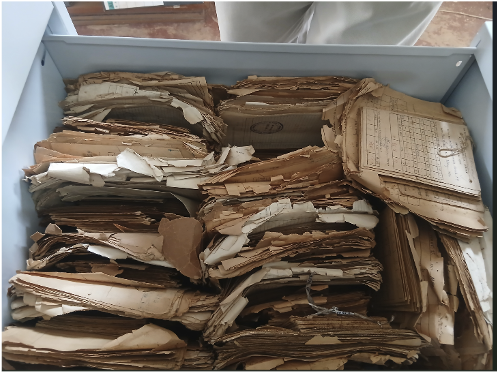
Data Rescue in Uganda
Bringing AI into Forecast Operations
Beyond strengthening data systems, the projects are supporting the practical application of AI in operational weather forecasting. Operationalising AI means integrating AI-generated guidance into routine forecasting workflows alongside conventional numerical weather prediction models and expert meteorological analysis, rather than replacing existing forecasting systems.
National Meteorological and Hydrological Services in the focus countries are currently testing and validating the Conditional Generative Adversarial Network (cGAN) model, an AI-based forecasting tool designed to improve short-term rainfall predictions. Forecasts for six-hour and twenty-four-hour rainfall accumulations are being generated and evaluated alongside conventional forecasting systems, providing forecasters with an additional source of guidance. Early validation exercises have shown encouraging results, although further testing is underway before full operational adoption.
Countries are also exploring ensemble forecasting techniques, which combine multiple forecast outputs, including AI and conventional models, to improve reliability and better capture forecast uncertainty. By integrating different forecast members, meteorological services can develop a more comprehensive understanding of possible weather outcomes and better identify high-risk situations.
Global AI models such as ECMWF’s AIFS also provide an important foundation. However, these products require validation, interpretation, and adaptation by national meteorological services to reflect local weather patterns and operational needs. AI therefore complements rather than replaces the expertise of operational forecasters.
While these technologies continue to be refined, they represent a significant step toward integrating AI into operational forecasting across the region.
Investing in People, Not Just Technology
As Hannah Wangari of the Kenya Meteorological Department explains:
“In Kenya, the focus is on people. The project has expanded knowledge and skills among operational forecasters, ensuring that expertise is shared across teams rather than concentrated among a few specialists. Today, more forecasters can generate and interpret AI-based forecasts. This creates ownership, strengthens continuity, and builds confidence in the future use of these technologies.”
Technology alone cannot transform forecasting systems. Building the skills, knowledge, and confidence of forecasters is equally important to ensure long-term sustainability beyond the project.
Recognising this, SEWAA and ACRIFI have invested heavily in strengthening technical capacity across the focus countries. Forecasters have received training in Python programming, machine learning, forecast verification and probabilistic forecasting, equipping them with the skills needed to generate, evaluate and interpret AI-assisted forecasting products.
In Kenya, the emphasis has been on ensuring that knowledge and expertise are shared across operational forecasting teams rather than concentrated among a few specialists, promoting institutional ownership and long-term sustainability.
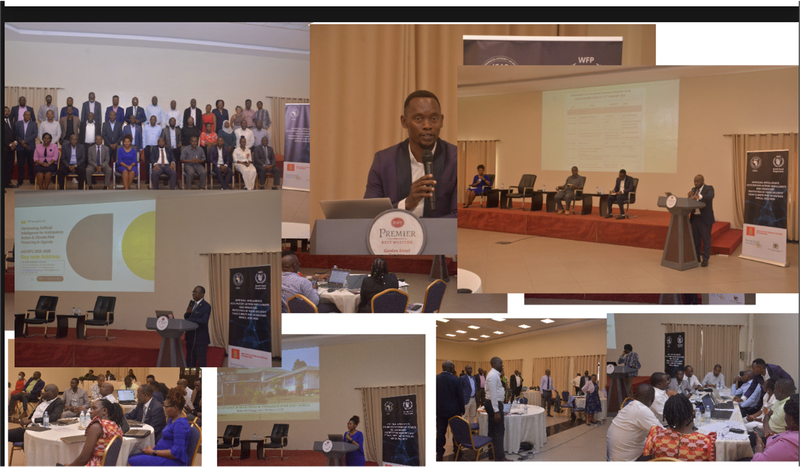
Capacity Building Sessions in focus countries
These investments are helping build a new generation of meteorologists who can work confidently at the intersection of atmospheric science, climate services, and emerging AI technologies.
Looking Ahead
As AI continues to evolve, its applications in climate services and early warning systems are expected to expand. Improved forecasts can support earlier action ahead of floods, droughts, and other climate-related hazards. More accurate information can help governments allocate resources more effectively, enable humanitarian organisations to act before crises escalate, support farmers in making climate-informed decisions and strengthen community resilience.
However, AI is not a silver bullet. Its effectiveness depends on quality observations, sustained investment in meteorological infrastructure, strong technical capacity, and continuous model validation. Human expertise will remain essential for interpreting forecasts, communicating uncertainty, and issuing trusted warnings.
The future of forecasting in Eastern Africa lies not simply in the advancement of artificial intelligence, but in how deliberately that advancement is shaped to reflect the realities of the communities it serves. As AI-driven models become increasingly central to weather and climate prediction across the region, the next frontier is epistemic inclusion: the deliberate integration of indigenous and local knowledge systems, generations-old systems of reading animal behaviour, plant phenology, wind patterns, and celestial cues, into the architecture of these models. Learning how to systematically combine this knowledge with AI would be transformative for the sector: it would sharpen forecast accuracy at the hyper-local level where coarse-resolution models struggle, build trust and uptake by closing the long-standing gap between scientific forecasts and last-mile usability, strengthen model robustness in data-sparse conditions through a continuously updated source of ground-truth observation, and, most fundamentally, advance equity by recognizing the people who have stewarded environmental observation for centuries as knowledge producers rather than mere recipients of climate services.
Realising this future will require participatory frameworks that document and validate indigenous knowledge without extracting it from its cultural and relational context, and deliberate efforts to include the voices of women, pastoralists, and smallholder farmers who have historically been excluded from formal climate science spaces, positioning Eastern Africa to lead globally in demonstrating what a genuinely co-produced, equitable AI-forecasting ecosystem can look like.
Looking ahead, continued investment in observation networks, open climate data, digital infrastructure, regional collaboration and AI governance will be critical to ensuring these innovations deliver lasting benefits across Eastern Africa.
Artificial intelligence is unlikely to replace traditional forecasting systems. Instead, its greatest potential lies in strengthening them. By combining AI, numerical weather prediction, and human expertise to produce more accurate, reliable, and actionable forecasts that better support early warning and anticipatory action.
The question is no longer whether artificial intelligence can contribute to climate forecasting and early warning. The question is how quickly countries can harness its potential to strengthen climate services, enable anticipatory action, and build more resilient communities.
For Eastern Africa, that journey has already begun.
Reference
WMO. (2025, October 13). Forecasting the Future: The Role of Artificial Intelligence in Transforming Weather Prediction and Policy. Retrieved from World Meteorological Organisation: https://wmo.int/media/magazine-article/forecasting-future-role-of-artificial-intelligence-transforming-weather-prediction-and-policy