


Somalia Switches On Its Multi-Hazard Early Warning System, and a 24/7 Situation Room to Match
A new national platform and 24/7 Situation Room put real-time warnings in the hands of Somali decision-makers.
With technical support from the IGAD Climate Prediction and Applications Centre (ICPAC) and funding from the European Union, Somalia has launched a national platform that brings real-time hazard monitoring, analysis and warnings together in one place, along with a 24/7 National Situation Room linked to the regional situation room.
Somalia knows too well what happens when warnings come late. Droughts that wipe out herds and harvests, floods that sweep through riverine towns, tropical cyclones, landslides and disease outbreaks: for millions of Somalis, these are not distant risks but recurring realities. They are becoming more frequent and more severe.
This week in Mogadishu, the Government of Somalia took a decisive step to get ahead of them.
Through the Somalia Disaster Management Authority (SoDMA), the country officially launched the Somalia Multi-Hazard Early Warning System (MHEWS) and the Somalia National Situation Room. The system was developed with technical support from ICPAC and financial support from the European Union through the African Union Commission.
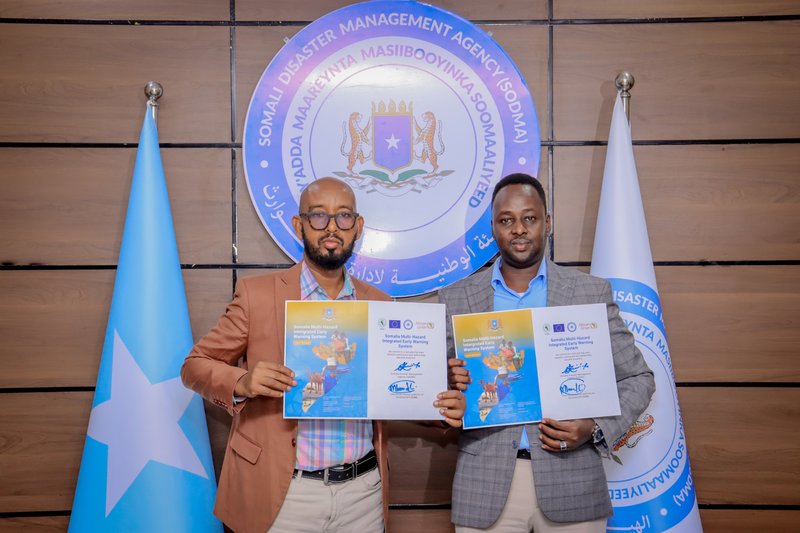
Somalia is now the second IGAD Member State to launch a national multi-hazard early warning system with ICPAC's support, after Uganda launched its MHIEWS in Entebbe in July 2026.
One platform, every hazard
At its core, the MHEWS is a centralised platform for real-time multi-hazard monitoring, analysis, visualisation and dissemination of early warning information. Instead of hazard data scattered across institutions, decision-makers at national and sub-national levels can now see the risks on one screen, in time to act.
The new National Situation Room will run 24/7 and is linked to the regional situation room at ICPAC. This means Somalia's warnings are now part of a wider regional picture, and regional forecasts can feed directly into national decisions.
Built to be run by Somalis
A system is only as strong as the people who run it. That is why the launch was preceded by a one-day hands-on training for system administrators and stakeholders from government ministries and departments.
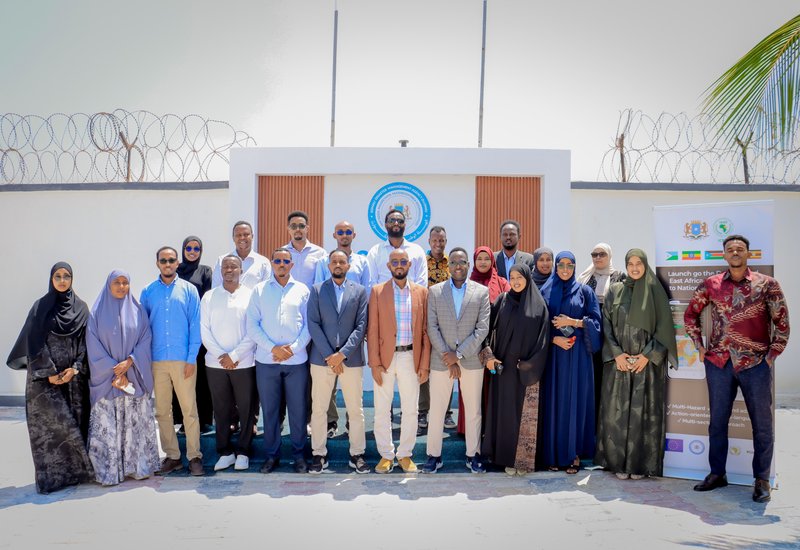
ICPAC experts walked participants through the platform from end to end: system architecture and layout, data visualisation, reviewing existing datasets and adding new ones, user administration and access management, and automating how data is downloaded and ingested into the system. The day closed with a session defining the roles and responsibilities of key government ministries, so that every warning has a clear owner and a clear path to action.
From forecast to action
Early warning only saves lives when it leads to early action. The MHEWS gives Somali authorities and partners the information they need to prepare and to act before a hazard becomes a disaster: pre-positioning supplies, alerting communities and releasing anticipatory financing.
The launch also moves Somalia forward on its national disaster risk management priorities and on its commitments under the Sendai Framework for Disaster Risk Reduction (2015–2030), the Africa Programme of Action for Disaster Risk Reduction, and the UN Secretary-General's Early Warnings for All (EW4All) initiative, which aims to have every person on Earth protected by early warning systems.
It builds on Somalia's existing leadership on anticipatory action: the country is one of five in the region that have already completed and launched a national Anticipatory Action Roadmap.
A growing regional network
With Uganda and now Somalia online, the vision of a connected early warning network across the Greater Horn of Africa is taking shape, with national systems speaking to each other and to the regional centre. ICPAC will continue working with IGAD Member States to extend national multi-hazard early warning systems across the region.
For the people of Somalia, the result should be simple: earlier warnings, better decisions, and fewer lives and livelihoods lost.