


More than 40 million people in six IGAD Member States face high levels of acute food insecurity in 2026
The IGAD Regional Focus of the 2026 Global Report on Food Crises highlights worsening food crises in four countries, severe child malnutrition and the continuing impact of conflict, weather extremes and economic shocks.
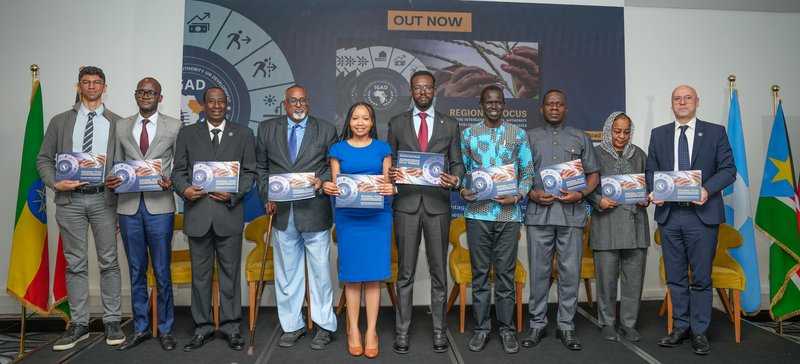
Nairobi, Kenya, 24 September 2026: More than 40.3 million people, or 34 per cent of the population analysed, face high levels of acute food insecurity in six IGAD Member States in 2026.
2026 Global Report on Food Crises: Regional Focus on the IGAD Member States covers Djibouti, Kenya, Somalia, South Sudan, Sudan and Uganda. While the overall figure has declined from 43.3 million in 2025, food crises have worsened in Djibouti, Kenya, Somalia and South Sudan. Improvements in Sudan and Uganda account for the regional reduction.
Sudan remains the region’s largest food crisis, with 19.5 million people facing high levels of acute food insecurity between February and May 2026. South Sudan has the highest proportion of people affected, at 55 per cent of its population between April and July. Across the six countries, more than 10 million people faced Emergency levels of acute food insecurity (IPC Phase 4), while over 208,000 people were experiencing Catastrophe (IPC Phase 5) in the Sudan and South Sudan during the periods assessed.
Additionally, the report identifies a risk of Famine in parts of Sudan, South Sudan and Somalia. Conflict, displacement and restrictions on humanitarian access are among the factors placing communities at greatest risk.
Food crises across the region are being driven by overlapping shocks. Conflict and insecurity continue to disrupt livelihoods and food production, while poor rainfall and other weather extremes have affected communities already struggling with high food and fuel prices. Cuts to humanitarian funding are adding pressure at a time when needs remain severe.
Acute malnutrition is also a major concern, with more than nine million children aged 6–59 months needing treatment for acute malnutrition across the six countries, including 2.3 million suffering from severe acute malnutrition.
The region continues to face extensive displacement. By the end of July 2026, an estimated 19 million people were living in forced displacement across the six countries, including nearly 14.5 million internally displaced people and 4.5 million refugees and asylum seekers. Displacement often separates families from their livelihoods and makes it harder for them to access food and essential services.
IGAD's Executive Secretary, H.E. Dr Workneh Gebeyehu, stated: “This report is more than a record of need. It is a case for changing how we act, and three shifts are required: from response to anticipation, so that forecasts trigger finance and action before shocks become crises; from relief to investment, so that agri-food systems, livelihoods and markets are rebuilt to withstand the next shock; and from national to regional action, because hunger crosses borders with people, livestock, pests and prices, and our answers must do the same.”
End.
The eighth edition of the IGAD Regional Focus of the Global Report on Food Crises continues to provide essential information, analyses, and insights to collectively address the causes and consequences of escalating acute food insecurity and malnutrition in the region.
It is a by-product of the annual Global Report on Food Crises (GRFC 2026), which is the result of a complex, multi-partner, consensus-based process involving commitment and contributions from a multitude of agencies and individuals.
Notes to editors: *The Integrated Food Security Phase Classification (IPC) is a set of standardised tools used to classify the severity of food insecurity using a widely accepted five-phase scale: Minimal (IPC Phase 1), Stressed (IPC Phase 2), Crisis (IPC Phase 3), Emergency (IPC Phase 4) and Catastrophe/Famine (IPC Phase 5).
ICPAC provides climate services to IGAD member states (Djibouti, Ethiopia, Eritrea, Kenya, Somalia, South Sudan, Sudan, and Uganda), plus Burundi, Rwanda, and Tanzania.
Key resources
IGAD Regional Focus of the 2026 Global Report on Food Crises
2026 Global Report on Food Crises
Media requests
Paula Machio: paula.machio@igad.int
Edwin Kiplagat: edwin.kiplagat@igad.int
Emebet Jigssa: emebet.jigssa@igad.int